
get to know us
Project Background
As global demand for renewable energy accelerates, solar inverter manufacturers face increasing pressure to shorten development cycles, improve enclosure durability, and scale production rapidly.
A leading solar energy equipment provider approached us with a critical challenge:
Reduce prototype development time
Achieve near-perfect dimensional accuracy
Support large-scale production for international markets
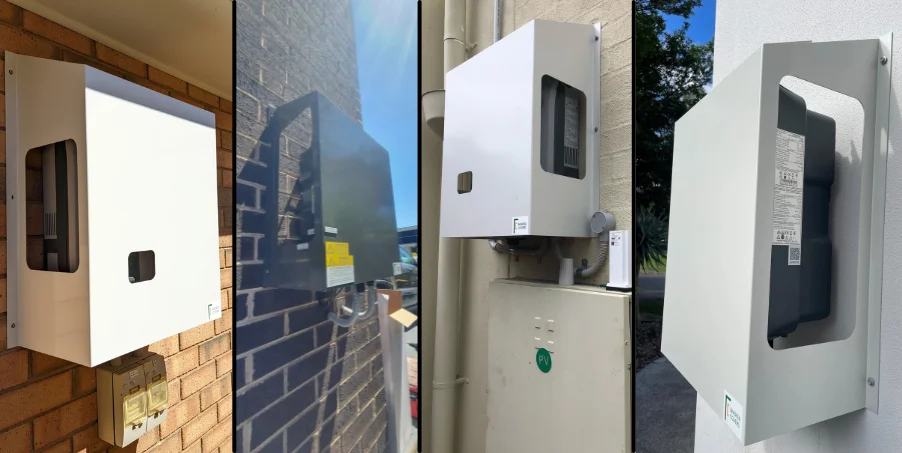
The core component in focus was the solar inverter housing, a structural and thermal management enclosure designed to protect sensitive electronic systems in outdoor environments.
Technical Challenges
Solar inverter housings must meet strict performance standards:
High structural integrity for outdoor installation
Excellent heat dissipation for power electronics
IP-rated sealing compatibility
Tight dimensional tolerances for PCB and heat sink integration
Corrosion resistance under UV and humidity exposure
Additionally, the client required rapid iteration between design validation and pilot production — without sacrificing precision.
Engineering Solution
1️⃣ 30% Reduction in Prototype Development Cycle
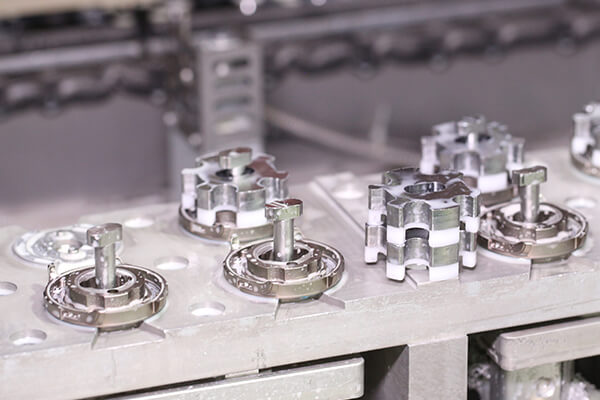
Through an optimized integrated casting and CNC machining workflow, we restructured the development process:
Early-stage DFM (Design for Manufacturability) analysis
Rapid mold preparation using precision casting simulation
Parallel CNC finishing validation
As a result, the prototype cycle was shortened by 30%, significantly reducing the time from design to functional validation.
This acceleration enabled the client to move faster toward market testing and regulatory certification.
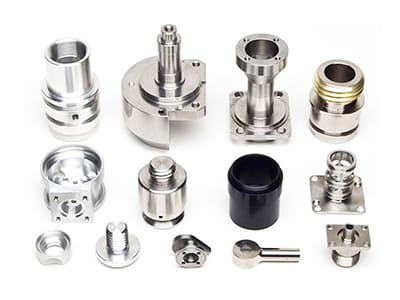
2️⃣ 99.8% Dimensional Accuracy Through Precision Casting & Machining
To achieve high structural integrity and assembly compatibility, we implemented:
High-pressure precision die casting for structural stability
Secondary 5-axis CNC machining for critical interface surfaces
Real-time dimensional verification using CMM systems
Statistical Process Control (SPC) for batch consistency
The final dimensional accuracy rate reached 99.8% compliance, ensuring seamless integration with:
Heat sinks
Power modules
Sealing systems
Mounting brackets
This high level of precision reduced assembly rework and improved overall inverter reliability.
3️⃣ Scalable Production: 1,000,000+ Parts Annual Capacity
To meet global distribution requirements, we deployed an integrated production system, including:
Automated casting lines
Multi-station CNC machining centers
Robotic handling systems
Inline quality inspection
This infrastructure supports an annual capacity exceeding 1 million components, while maintaining consistent tolerance control and surface finish quality.
Such scalability ensures our clients can expand into international solar markets without supply chain bottlenecks.
Performance Results
Key Metric Achieved Outcome
Prototype Development Time ↓ 30%
Dimensional Accuracy 99.8%
Annual Production Capacity 1,000,000+ units
Process Integration Casting + CNC + Inspection
Industry Application Solar / Renewable Energy
Industry Impact
By combining precision casting, high-accuracy CNC machining, and automated production systems, we enabled our client to:
Accelerate product launch timelines
Improve inverter structural reliability
Reduce post-assembly adjustments
Secure stable supply for global expansion
This project demonstrates how advanced manufacturing directly supports the growth of the renewable energy industry.
Why It Matters for Solar & Energy Equipment Manufacturers
For companies developing:
Solar inverters
EV charging systems
Energy storage enclosures
Power electronics housings
Partnering with a precision manufacturer capable of rapid prototyping, high dimensional stability, and scalable production is essential for market competitiveness.
continue reading
Related Posts

Thermal Stability in Precision Machining: Controlling Micron-Level Accuracy Under Extreme Conditions
According to product design, once you decide to use CNC to process the product, you should choose the best material, whether it is metal, plastic
According to product design, once you decide to use CNC to process the product, you should choose the best material, whether it is metal, plastic
According to product design, once you decide to use CNC to process the product, you should choose the best material, whether it is metal, plastic